
Home Improvement guide
Concrete Driveway and Walkway Guide for NYC Homes: Base, Joints, Drainage and Curing
What decides whether a concrete driveway or walkway lasts in New York: base preparation, thickness, control joints, drainage and curing. A homeowner checklist. Key points in this guide: Base and drainage matter more than the finish; Thickness and reinforcement depend on foot or vehicle loads; Control joints guide where concrete cracks.
Quick answer
A concrete driveway or walkway lasts when the work under and around the slab is done well. Base preparation, correct thickness for foot or vehicle loads, reinforcement, control joints, slope for drainage and proper curing matter more than the surface finish. New York's freeze-thaw cycles and de-icing salts are hard on poor concrete, so cracks, scaling and settling usually trace back to a weak base or standing water. Gotham Home Services pours and repairs concrete across Queens, Brooklyn, Manhattan, the Bronx and Staten Island, visits the site first and gives a written quote before any approved work begins.
Published · Updated
By Gotham Home Services Inc. · NYC home improvement contractor license 2132513-DCWP
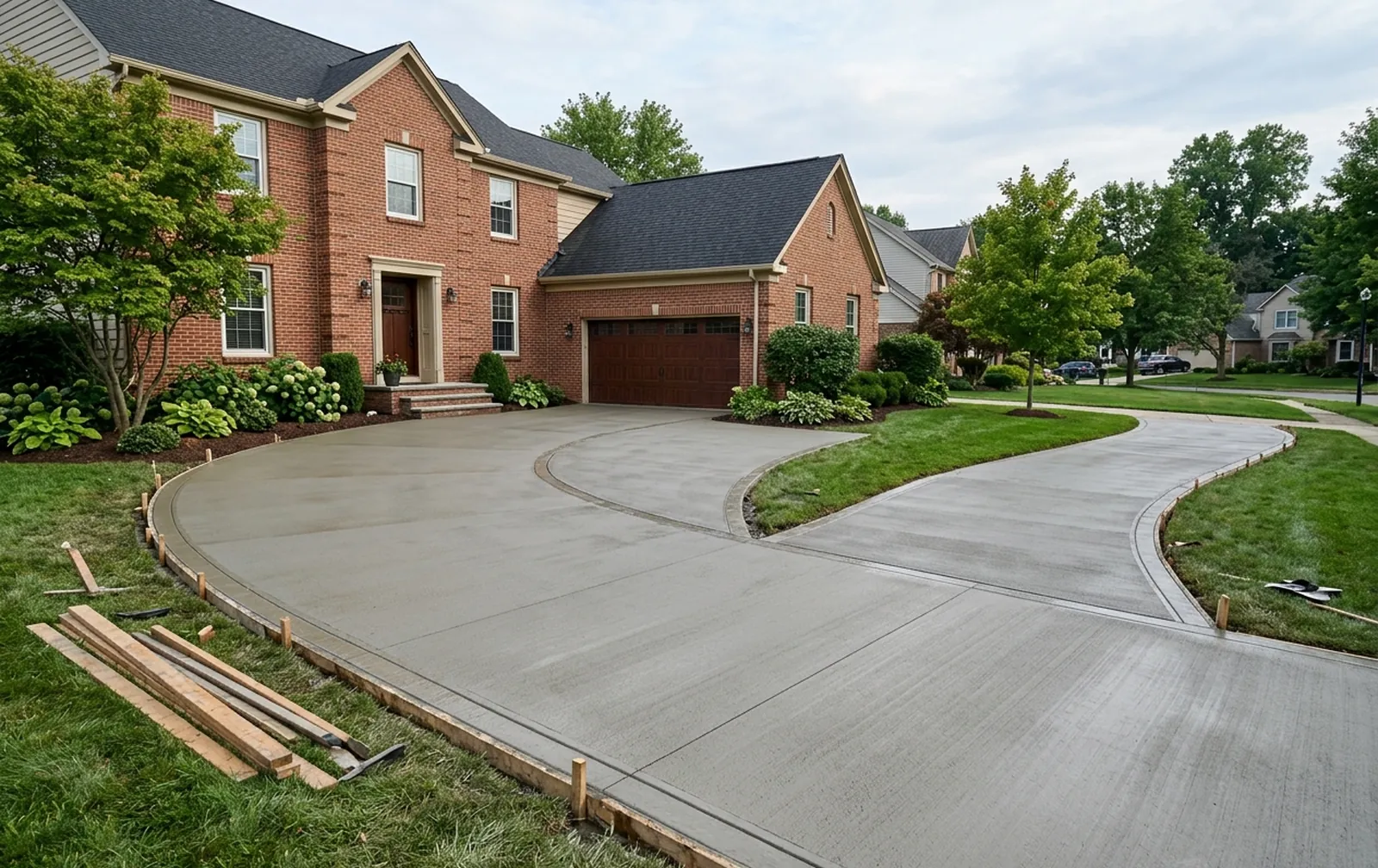
A concrete driveway or walkway is only as good as what is under it. Before any concrete is poured, the old surface and soft soil are removed, the base is compacted and graded, and forms are set to the right height and slope. For concrete service across New York City, see concrete work in NYC.
Key points
- 1.Base and drainage matter more than the finish
- 2.Thickness and reinforcement depend on foot or vehicle loads
- 3.Control joints guide where concrete cracks
- 4.Slope should carry water away from the house
- 5.Curing time and weather affect strength
- 6.Repair or replace depends on the condition of the slab
In more detail
Thickness and reinforcement follow the load. A walkway that only carries foot traffic does not need the same slab as a driveway that carries cars and delivery vehicles. We confirm the plan in the written scope, including reinforcement and the finish, so you know what you are buying before work starts.
Control joints are cut or tooled so concrete cracks in straight, planned lines instead of randomly. Slope matters just as much: water should run away from the house, garage and steps, not pool against them. Pooling water is behind most flaking, scaling and freeze-thaw damage. If water is also reaching your basement, read about basement waterproofing methods.
Curing is the quiet part of the job. Concrete gains strength over days, not hours, and heat, cold and rain change how it should be protected. We tell you when foot traffic and vehicles are okay for your pour, and we avoid de-icing salts on new concrete in its first winter.
If you have cracked or sunken slabs, the question is repair or replace. A single hairline crack is cosmetic; heaving, settling or widespread scaling usually means the base has failed. Many homeowners also compare poured concrete with pavers; see pavers versus poured concrete before you decide.
FAQ
Frequently asked questions
What is the short answer on concrete Driveway and Walkway Guide for NYC Homes?
A concrete driveway or walkway lasts when the work under and around the slab is done well. Base preparation, correct thickness for foot or vehicle loads, reinforcement, control joints, slope for drainage and proper curing matter more than the surface finish.
What are the key points to remember?
Base and drainage matter more than the finish. Thickness and reinforcement depend on foot or vehicle loads. Control joints guide where concrete cracks. Slope should carry water away from the house. Curing time and weather affect strength. Repair or replace depends on the condition of the slab.
Does Gotham Home Services serve my area?
Yes. Gotham Home Services serves Manhattan, Brooklyn, Queens, the Bronx, Staten Island and Long Island.
How do I get a quote?
Call (516) 348-5145 or request a quote online. A technician diagnoses the problem on site and gives a written quote before any approved work begins.