
1. Confirm what you actually need
A site visit establishes what the apartment can support: equipment type, placement, electrical capacity and drainage. That determines what you are asking the board to approve.
24/7 Dispatch · Manhattan, Brooklyn, Queens & Long Island
Apartment and co-op owners
Replacing or adding HVAC equipment in a New York City co-op or condo apartment normally requires written building approval before work starts, usually through an alteration agreement administered by the board or managing agent. The submission typically names the contractor, the equipment, the electrical work, any wall or facade penetration, the insurance certificates required and the work hours allowed. Gotham Home Services Inc., New York City home improvement contractor license 2132513-DCWP, prepares the scope and equipment details owners submit, then schedules once approval is granted. Pricing is quote on request after inspection. Work is limited to residential, light-commercial and PTAC scopes we perform ourselves.
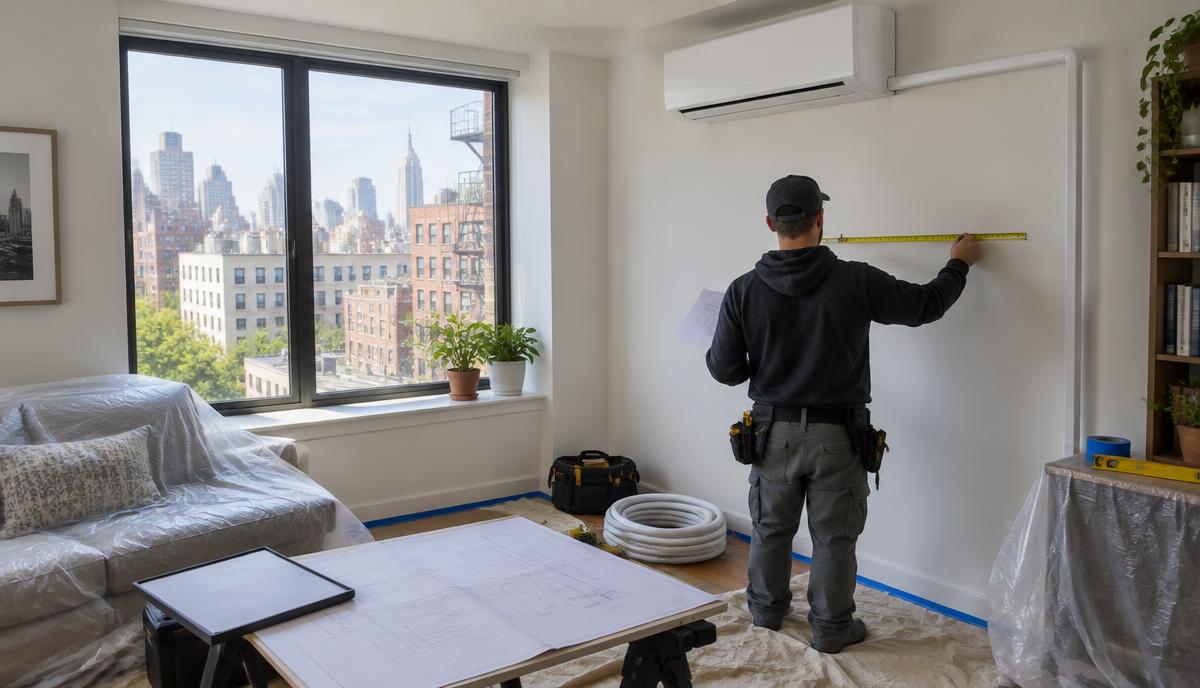
A site visit establishes what the apartment can support: equipment type, placement, electrical capacity and drainage. That determines what you are asking the board to approve.
Most buildings restrict facade and window penetrations, condenser placement, work hours and which trades may work unsupervised. These rules decide the design more often than equipment preference does.
Boards generally want the scope of work, equipment specifications, the contractor's licence details and certificates of insurance naming the building and managing agent.
Review takes time and often comes back with conditions — different placement, added soundproofing, restricted hours. Build that into your timeline rather than booking work first.
Work is booked once approval is in writing, with access, elevator use and protection of common areas arranged with building staff.
Related: ductless mini-split installation, PTAC service, heat pump conversions, our licence details.
Usually yes for anything involving a sleeve, wall penetration, new equipment or electrical work. A like-for-like PTAC swap may need only notice, but the house rules decide.
A contract between the owner and the building setting out the approved work, the contractor's obligations, insurance requirements, work hours and the owner's responsibility for damage.
It depends on whether the building permits a condenser location and the required penetrations. Where it does not, a through-wall PTAC is often the practical alternative.
Typically general liability and workers' compensation certificates naming the building, the managing agent and sometimes the owner as additional insureds.
It varies by building and board meeting schedule. Plan for weeks rather than days, especially before summer.
We provide the scope, equipment details and licence information for your submission. The board's own forms are issued by the managing agent.