
Residential guide
Steam Radiator Banging or Cold on One Side? A Plain-English Guide for NYC Homes
Banging pipes and radiators that heat only halfway are common in older NYC homes. Here are the usual causes and what is safe to check before calling a pro. A technician diagnoses the problem on site and gives a written quote before any approved work begins. Gotham Home Services Inc. holds NYC home improvement contractor license 2132513-DCWP.
Quick answer
Steam radiators that bang, hiss or stay cold on one side are common in older New York City homes and usually trace to trapped water, a radiator that no longer slopes toward its supply pipe, a stuck air vent or a valve left half open. Check that each radiator valve is fully open or fully closed, keep towels and furniture away from hot metal, and never open a pressurized system. Boiler water level and venting need a trained eye. Gotham Home Services inspects steam and hot-water heating in NYC homes and provides a written quote for the recommended repair before approved work begins.
Published · Updated
Older New York City buildings often heat with steam, and the noises and cold spots can be alarming. This guide explains the usual causes in plain language, and for equipment help see residential heating service in NYC.
Key points
- 1.Banging usually means water trapped in a pipe or radiator
- 2.A radiator that is cold on one side often has a stuck air vent
- 3.Valves should be fully open or fully closed, never half open
- 4.Radiators and pipes can cause burns, so avoid touching hot metal
- 5.Boiler water level and venting need a trained technician
- 6.Document noises and cold spots to speed up diagnosis
In more detail
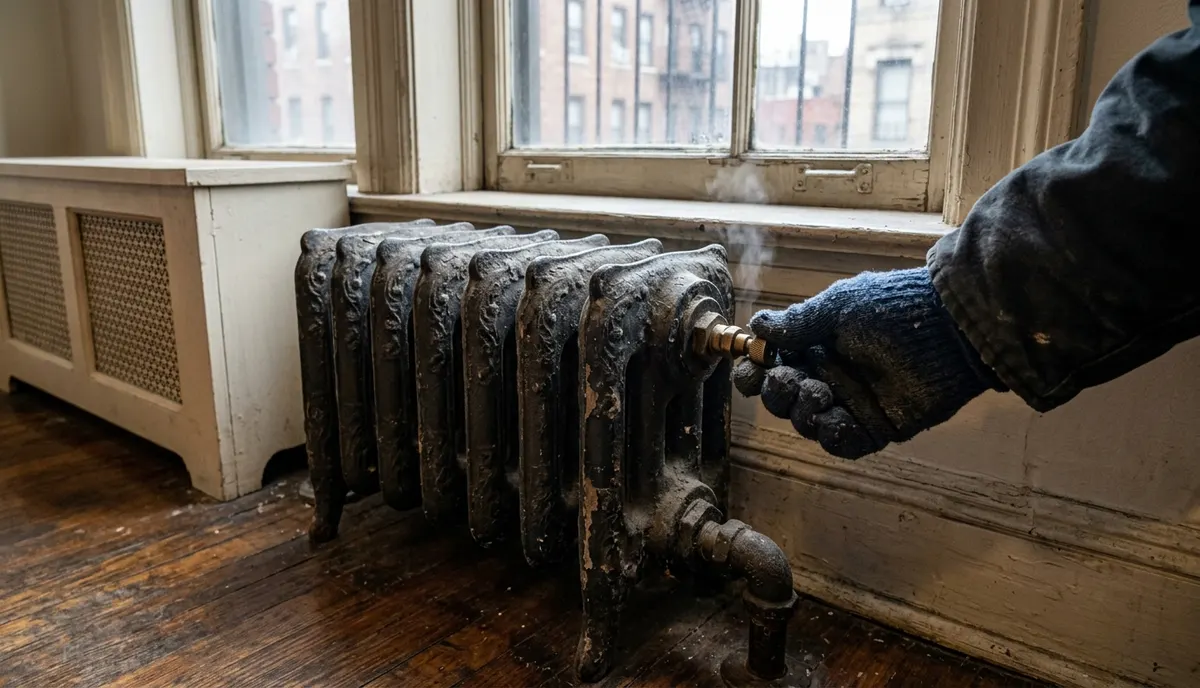
Banging, sometimes called water hammer, usually happens when steam meets condensed water that has pooled in a pipe or radiator. Common reasons are a radiator that has settled so it no longer slopes back toward its supply pipe, a pipe that has sagged, or a boiler water level that is wrong. A valve that is only partly open can also trap water, which is why each radiator valve should be fully open or fully closed.
A radiator that is hot at one end and cold at the other often has an air vent that is stuck or clogged, so air cannot escape and steam cannot fill the radiator. Replacing a vent is a simple repair, but the vent size matters, and a technician can match it to the radiator and system. If many radiators are cold, the boiler, pressure or controls may be the cause. See HVAC options for pre-war NYC apartments if you are weighing a larger change.
Steam radiators and pipes are hot enough to burn. Do not open a bleed or vent on a pressurized system, and if you smell gas or a carbon monoxide alarm sounds, follow these gas and carbon monoxide safety steps first. If you have no heat at all in heat season, the NYC heat requirements explain what owners must provide.
This article gives general information, not an on-site diagnosis. System type, building rules and equipment condition decide the right repair, so request an inspection for findings tied to your installation.
FAQ
Frequently asked questions
What is the short answer on steam Radiator Banging or Cold on One Side?
Steam radiators that bang, hiss or stay cold on one side are common in older New York City homes and usually trace to trapped water, a radiator that no longer slopes toward its supply pipe, a stuck air vent or a valve left half open. Check that each radiator valve is fully open or fully closed, keep towels and furniture away from hot metal, and never open a pressurized system.
What are the key points to remember?
Banging usually means water trapped in a pipe or radiator. A radiator that is cold on one side often has a stuck air vent. Valves should be fully open or fully closed, never half open. Radiators and pipes can cause burns, so avoid touching hot metal. Boiler water level and venting need a trained technician. Document noises and cold spots to speed up diagnosis.
Does Gotham Home Services serve my area?
Yes. Gotham Home Services serves Manhattan, Brooklyn, Queens, the Bronx, Staten Island and Long Island.
How do I get a quote?
Call (516) 348-5145 or request a quote online. A technician diagnoses the problem on site and gives a written quote before any approved work begins.