
PTAC guide
PTAC Leaking Water Inside: Causes and What to Do First
Water dripping from a PTAC into a room is usually a drain, tilt, airflow or sleeve-seal problem. Here is how to tell them apart and when to stop. Key points in this guide: Blocked condensate drain or full base pan; Unit not pitched slightly toward the outside; Frozen indoor coil melting faster than it drains.
Quick answer
Water dripping from a PTAC into the room usually comes from a blocked condensate drain or base pan, a unit that is not pitched slightly toward the outside, a frozen coil that melts faster than it can drain, or a gap in the wall sleeve seal letting rain in. Turn the unit off, put a towel and container under the leak, and keep water away from the outlet and cord. If water keeps returning after the filter is cleaned, the drain, sleeve or coil needs a technician. Gotham Home Services diagnoses leaking PTACs in Manhattan, Brooklyn, Queens and Long Island, with a written quote before any approved work begins.
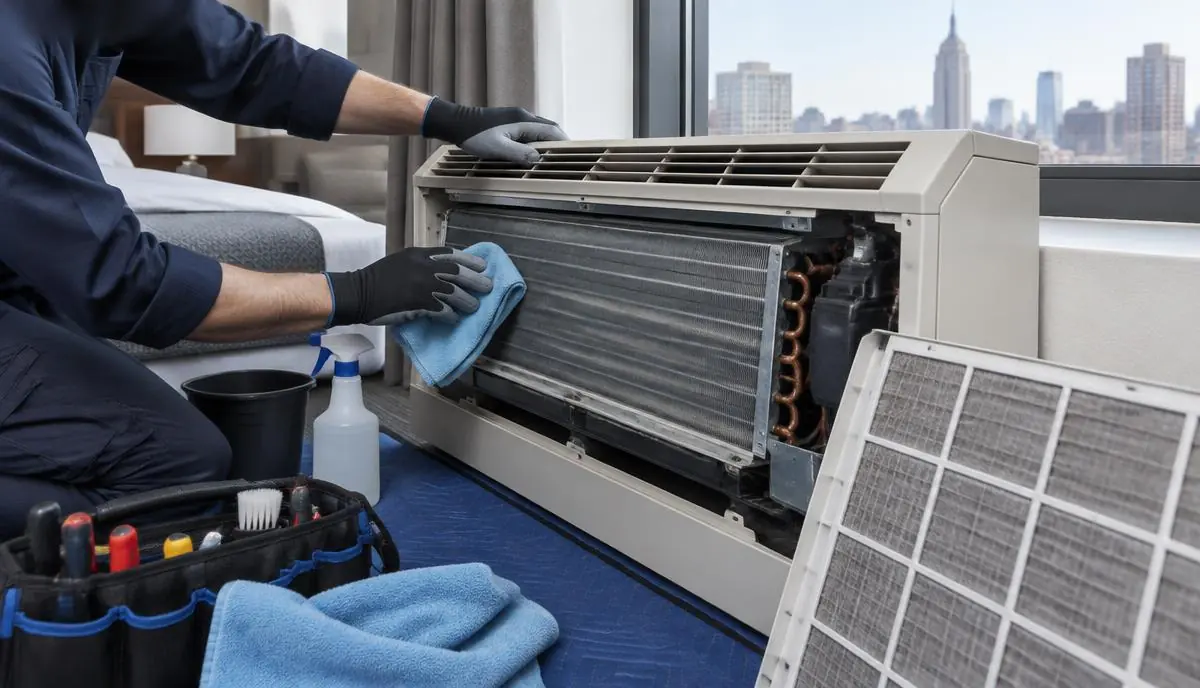
Published · Updated
Water on the floor under a PTAC is more than a nuisance: it can stain ceilings below, damage floors and reach the electrical supply. The first job is to work out whether the water is condensate from the unit or rain getting in around it, because the fixes differ. For PTAC service across New York City and Long Island, see PTAC service in NYC.
Key points
- 1.Blocked condensate drain or full base pan
- 2.Unit not pitched slightly toward the outside
- 3.Frozen indoor coil melting faster than it drains
- 4.Dirty filter or blocked airflow causing icing
- 5.Damaged or missing drain parts, or a cracked base pan
- 6.Gaps or rust in the wall sleeve and weather seal letting rain in
- 7.Water near the outlet or cord: switch off at the breaker
In more detail
Make the area safe first. Turn the unit off, and if water is near the outlet, the cord or the electrical connection, switch off its breaker before touching anything. Put a towel and a shallow container under the drip. Then look at the pattern. Water that appears only while the unit is cooling, mostly in warm humid weather, points to condensate. Water that appears during or after rain, even with the unit off, points to the sleeve, seal or outdoor grille. A PTAC collects condensate as it cools, and most designs carry it to the outdoor side, where it drains or is thrown onto the outdoor coil by a fan ring, so anything that blocks that path pushes water indoors.
The common condensate causes are a blocked drain or full base pan, a unit that is not pitched slightly toward the outside, and an iced indoor coil. PTACs are installed with a slight tilt to the outdoors so water runs out rather than in, and a unit that has settled or was set level can spill into the room. A dirty filter or blocked front grille can ice the coil, and when it thaws it can overflow the pan; PTAC not cooling: causes and what to check explains the airflow and coil causes. Damaged or missing drain parts and a cracked base pan also leak.
Rain-related leaks come from the building side. A gap between the sleeve and the wall, a failed weather seal, rust through the sleeve or a damaged outdoor grille can let water run into the room. These repairs often involve the exterior wall, so in a co-op, condo or rental, report the leak to building management and ask who is responsible before arranging work. Regular filter cleaning and coil and drain checks reduce condensate problems, and the PTAC maintenance schedule for co-ops and hotels sets out what to check and how often.
Do not keep running a unit that is leaking onto the floor or near electrical parts. Do not drill holes in the base, remove panels to reach wiring, or open sealed refrigerant parts. If water keeps returning after the filter is clean and the grille is clear, or you see rust, stained plaster or mold, have the unit and sleeve inspected; signs a PTAC needs replacement covers when a leaking unit is not worth repairing. Gotham Home Services inspects the unit, wall sleeve, drainage and electrical supply, then gives a written quote before any approved work begins.
This guide gives general information, not an on-site diagnosis or advice on building rules or tenant rights. Equipment condition, manufacturer instructions and property rules determine the right work. Request an inspection for findings tied to your installation.
FAQ
Frequently asked questions
What is the short answer on pTAC Leaking Water Inside?
Water dripping from a PTAC into the room usually comes from a blocked condensate drain or base pan, a unit that is not pitched slightly toward the outside, a frozen coil that melts faster than it can drain, or a gap in the wall sleeve seal letting rain in. Turn the unit off, put a towel and container under the leak, and keep water away from the outlet and cord.
What are the key points to remember?
Blocked condensate drain or full base pan. Unit not pitched slightly toward the outside. Frozen indoor coil melting faster than it drains. Dirty filter or blocked airflow causing icing. Damaged or missing drain parts, or a cracked base pan. Gaps or rust in the wall sleeve and weather seal letting rain in. Water near the outlet or cord: switch off at the breaker.
Does Gotham Home Services serve my area?
Yes. Gotham Home Services serves Manhattan, Brooklyn, Queens, the Bronx, Staten Island and Long Island.
How do I get a quote?
Call (516) 348-5145 or request a quote online. A technician diagnoses the problem on site and gives a written quote before any approved work begins.