
Cut Energy Bills With Smart HVAC Upgrades in NYC
Key takeaways
- Heating and cooling can account for almost half of a household energy bill, more than $900 a year, so HVAC is where upgrades pay back fastest.
- Moving from a baseline heat pump to the most efficient model can cut annual heating and cooling energy by about 36 percent in northern climates like NYC.
- The federal 25C tax credit covered upgrades only through the end of 2025, but New York state and utility rebate programs remain the main savings path in 2026.
- Smart thermostats and zoning reduce waste by heating or cooling only the spaces you use, when you use them.
- Replacing an aging system usually beats repairing it once repairs pile up on equipment past its expected service life.
The fastest route to HVAC energy savings in NYC is to target the single largest line on your energy bill: heating and cooling. ENERGY STAR reports that heating and cooling can account for almost half of a household's annual energy spend, more than $900 a year, so a high-efficiency system, a smart thermostat, and smart use of rebates return more than almost any other home upgrade.
This guide walks through the upgrades that actually move the needle for homeowners in Queens, Brooklyn, Manhattan, and Long Island. It covers high-efficiency systems, smart thermostats and zoning, the rebates available in 2026, and how to tell when replacement beats another repair.
High-Efficiency Systems: Where HVAC Energy Savings in NYC Begin
High-efficiency equipment lowers bills because it does the same heating and cooling work while drawing far less energy. In northern climates like New York, the U.S. Department of Energy estimates the best available air-source heat pump uses about 7,394 kWh per year versus 11,551 kWh for a less efficient model, a reduction of roughly 36 percent (U.S. Department of Energy).
That efficiency gap adds up over time. The same DOE analysis puts lifetime energy cost savings at about $5,243 over a 15-year service life when you compare the best available heat pump to a baseline unit. For a NYC home that runs heat through long winters and air conditioning through humid summers, those numbers compound year after year.
Efficiency ratings tell you what to look for. Cooling efficiency is measured in SEER2, heating in HSPF2 for heat pumps, and gas furnace efficiency in AFUE. Higher numbers mean less energy wasted. A system installed before current federal minimum standards took effect will almost always cost more to run than a modern replacement rated to today's requirements.
Right-sizing matters as much as the rating on the label. An oversized unit cycles on and off too often, and an undersized one runs constantly without keeping up. Matching capacity to your space is the difference between a system that quietly saves money and one that fights itself all season.
How Do Smart Thermostats and Zoning Help?
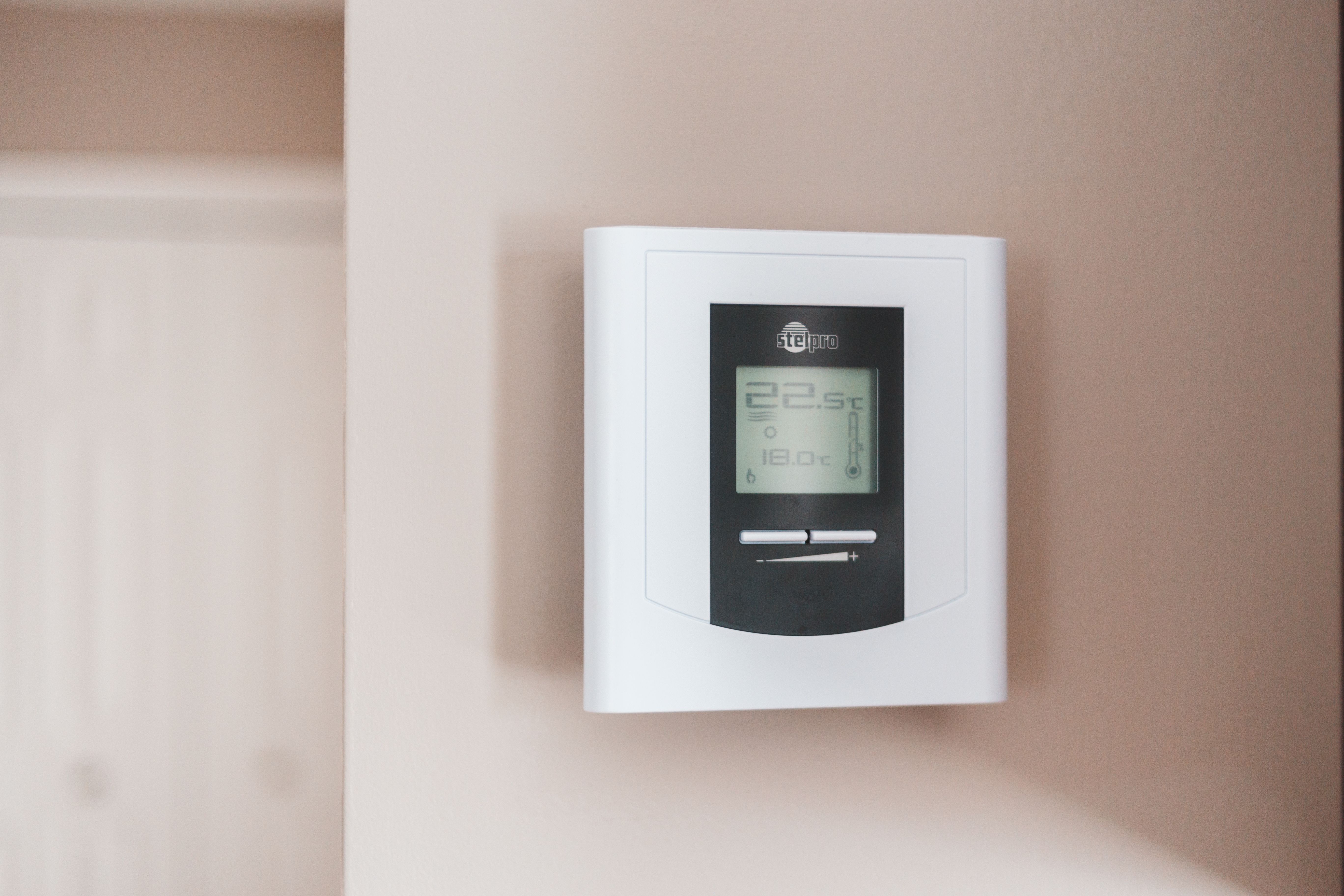
Smart thermostats and zoning cut waste by conditioning only the spaces you use, at the times you use them. ENERGY STAR certifies smart thermostats based on independently verified field data showing real energy savings, and that certification targets the roughly $900 a year the average household spends on heating and cooling (ENERGY STAR).
A smart thermostat earns its keep through automation. It learns your schedule, dials temperatures back while you sleep or leave for work, and lets you adjust settings from your phone. In a NYC apartment or row house where afternoon sun overheats the front rooms, that automatic response prevents the system from overshooting and burning energy.
Zoning takes the same idea further. A zoned system divides your home into areas with independent temperature control, so you are not paying to heat an empty upstairs bedroom while the family room stays cool. Ductless mini-split systems handle this naturally because each indoor head serves its own zone.
For older NYC housing stock where running new ductwork is difficult, ductless setups are often the practical choice. Each indoor head serves its own zone, so homes that were never built for central air still get room-by-room control without a major renovation.
What Rebates and Incentives Can NYC Homeowners Use?
In 2026, the main savings for NYC homeowners come from New York state and utility programs rather than federal tax credits. The federal 25C Energy Efficient Home Improvement Credit, which offset up to 30 percent of qualifying upgrade costs, applied only to equipment placed in service through the end of 2025, so homeowners installing in 2026 should plan around state and utility incentives instead.
The NYS Clean Heat program is the primary path for heat pump incentives in the Con Edison and PSEG Long Island service areas. Incentives are applied by participating contractors as an upfront discount on qualifying air-source and ground-source heat pump installations, which lowers the sticker price before you ever pay.
Con Edison also offers additional efficiency rebates, including incentives tied to smart thermostats and to removing fossil fuel heating equipment after a heat pump install. Income-qualified households may qualify for larger rebates through NYSERDA programs such as EmPower+ and the federally funded HEAR rebates.
Program amounts and eligibility change, so confirm current figures for your address before you commit. Check the official NYS Clean Heat site and Con Edison's rebate pages, and have your contractor verify what applies to your specific project and borough.
When Does Upgrading Beat Repairing?
Upgrading beats repairing once a system is past its expected service life and repairs start recurring. A newer unit with a single failed part is usually worth fixing. An aging system that needs frequent service, struggles to hold temperature, and runs on outdated efficiency standards costs more to keep alive than it saves.
Age is the clearest signal. As equipment ages it loses efficiency and reliability, so even a working older system quietly costs more each season than a modern replacement would. When the next repair bill is large relative to the value of the unit, replacement is usually the better financial call.
Rising energy bills with no change in usage are another tell. If your heating or cooling costs climb while your habits stay the same, the system is likely working harder to deliver less. Uneven temperatures between rooms, frequent cycling, and strange noises point in the same direction.
Routine maintenance helps you make this call with real information rather than guesswork. A technician who services your system regularly can tell you whether a repair buys meaningful years or just delays the inevitable. Our overview of how often you should service your HVAC system explains the schedule that keeps equipment honest.
How to Plan an Efficient HVAC Upgrade
Planning an efficient upgrade starts with understanding your home, not shopping for equipment. A load calculation sizes the system to your square footage, insulation, and window exposure, which prevents the oversizing that wastes energy and shortens equipment life. Get this step right before comparing units.
Sequence the work for the best return. Sealing air leaks and improving insulation first means you can install a smaller, less expensive system that still keeps up, because a tighter envelope loses less of the conditioned air you paid for. Efficiency upgrades reinforce each other when done in the right order.
Build the rebate paperwork into the plan from the start. Because NYS Clean Heat incentives are applied by participating contractors, choosing an installer enrolled in the program determines whether you capture those savings at all. Confirm enrollment and ask how the discount appears on your quote.
A knowledgeable local installer ties these pieces together. Gotham Home Services sizes systems, handles the rebate process, and installs the high-efficiency equipment that drives real HVAC energy savings for NYC homeowners across Queens, Brooklyn, Manhattan, and Long Island. The right partner turns a confusing upgrade into a straightforward one.
Start by scheduling a professional load calculation and an efficiency assessment of your current system. That single step tells you which upgrade will cut your bills the most, what size equipment your home actually needs, and which 2026 rebates you qualify for before you spend a dollar.
Frequently asked questions
- What gives the biggest HVAC energy savings in NYC?
- Heating and cooling make up almost half of a typical household energy bill, more than $900 a year per ENERGY STAR. A high-efficiency heat pump paired with a smart thermostat targets that spending directly, which is why system upgrades return more than smaller fixes.
- Is the federal HVAC tax credit still available in 2026?
- The 25C Energy Efficient Home Improvement Credit applied to equipment placed in service through December 31, 2025. For 2026 installations, New York homeowners should look to NYS Clean Heat and Con Edison rebate programs instead of the expired federal credit.
- How much can a high-efficiency heat pump save?
- The U.S. Department of Energy estimates the best available air-source heat pump saves about $5,243 over a 15-year life versus a baseline model in northern states, roughly a 36 percent cut in annual heating and cooling energy use.
- Should I repair or replace my old HVAC system?
- Repair makes sense for a newer system with an isolated fault. Once a unit is past its expected service life and repair costs recur, replacing it with a high-efficiency model usually lowers bills enough to justify the investment.
- Do smart thermostats really lower energy bills?
- ENERGY STAR certified smart thermostats earn certification based on independently verified field data showing real energy savings. They cut waste by adjusting temperatures automatically when you are asleep or away, so you stop paying to condition empty rooms.